

Vietnamese Funeral Customs and Traditions: A Guest’s Guide
A Vietnamese funeral usually lasts a few days. The family keeps vigil, relatives and friends come to pay their respects, and a memorial service is followed by the burial or the cremation. Guests wear dark or subdued clothes, bow and light incense, and often bring a wreath, incense or a condolence gift of money for the family.
Vietnamese funeral customs and traditions differ between the north and the south, between cities and the countryside, and between Buddhist and Catholic families. This guide describes the common pattern, with sources, so that you know what to expect as a guest, or how to show respect if you cannot travel.
Key facts
- How long it lasts
- Usually a few days. The coffin often stays at home for one to three days for visits before the procession.
- What to wear
- Dark or subdued clothes: black, white or gray.
- What to bring
- Incense, fruit, a condolence gift of money in an envelope with your name, or flowers.
- Flowers
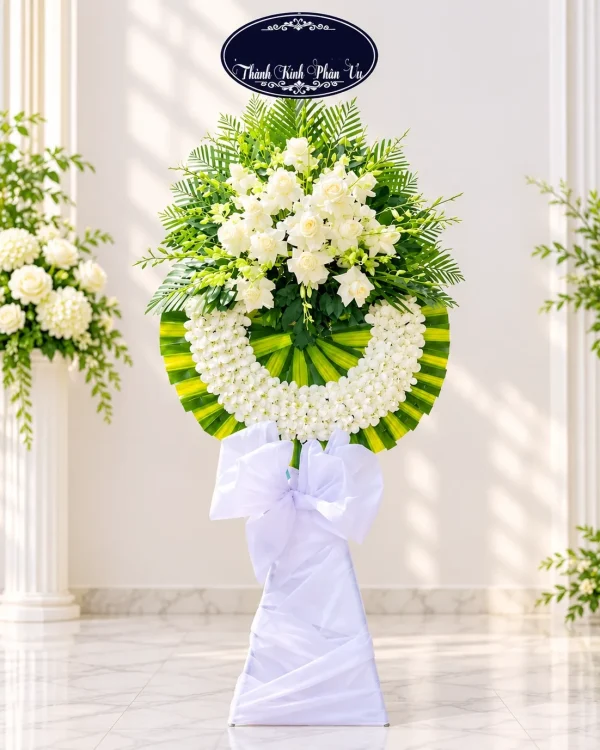
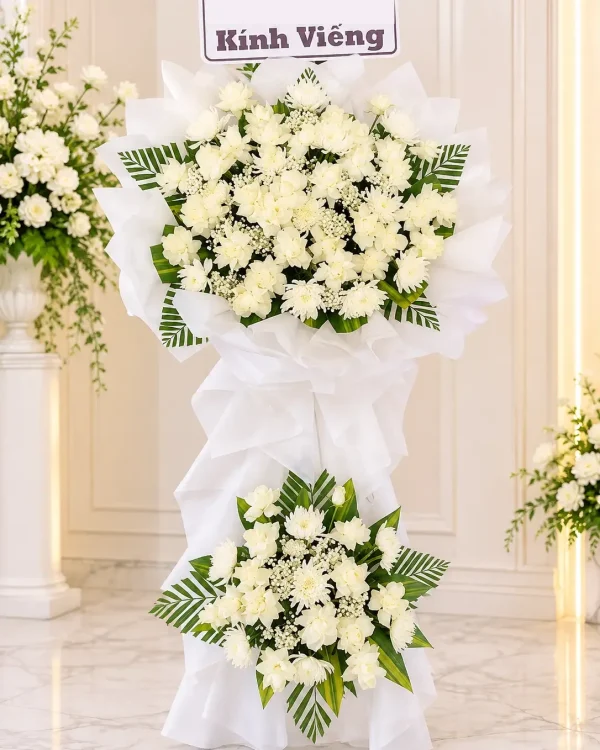
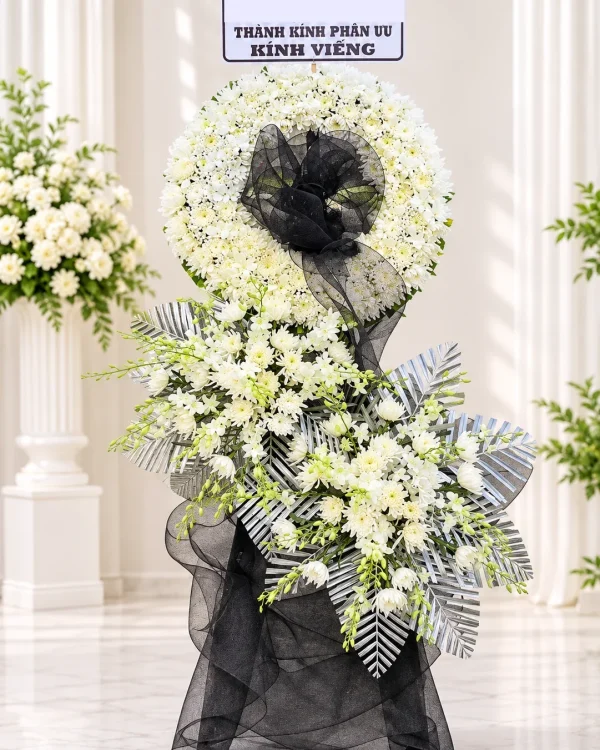
- Wreaths and flower stands, white or softly colored. Every funeral stand and wreath comes with a banner showing your name and a condolence phrase in Vietnamese.
- The 49th day
- For Buddhist families, 49 days of daily offerings end with a ceremony.
- From abroad
- Send a wreath or a flower stand to the funeral, flowers to the family’s home, or a message.

What happens at a Vietnamese funeral, and in what order?
Traditional Kinh funeral and burial customs follow a set of basic steps: the body is dressed and placed in the coffin, the procession leaves for the grave, and the burial follows. Then come the daily offerings, the rite on the 49th day, the rite on the 100th day, the first anniversary and, in some families, a later reburial.
| Step | Vietnamese name | What happens |
|---|---|---|
| Encoffining | khâm liệm, nhập quan | The body is washed, dressed and placed in the coffin |
| Visiting | lễ viếng | Relatives and friends come to pay their respects at set hours |
| Memorial service | lễ truy điệu | A formal farewell before the coffin leaves |
| Procession | di quan, đưa tang | The coffin is carried out and taken to the grave or the crematorium |
| Burial or cremation | an táng, hạ huyệt; hỏa táng | The coffin is lowered into the grave, or cremated |
| 49th day | chung thất | For Buddhist families, the last of seven weekly rites |
| 100th day | tốt khốc | The rite that ends the period of weeping |
| First anniversary | giỗ đầu, tiểu tường | Held 12 months after the death |
Practice differs by family, region and religion, so not every family holds every rite.
Between the encoffining and the procession comes the visiting period. In Ho Chi Minh City, according to an undertaker interviewed by Thanh Niên, the coffin usually stays at home for one to three days after the encoffining so that relatives and friends can visit. A memorial service then marks the farewell before the procession leaves.
Some places now keep funerals short. In 2026 Hue asked families to hold the whole funeral within 72 hours and encouraged cremation; until then, coastal families with relatives overseas sometimes waited more than a week for them to come home.
Many funerals still take place at the family’s home. In the cities, funeral homes are common: large hospitals have had their own for years, and Hanoi plans at least one in every urban area. Cremation has also become usual in the big cities. Hanoi and Ho Chi Minh City have the highest cremation rates in the country, and Hanoi Moi reported in 2026 that about 60% of families in Hanoi now choose it.
What is a funeral notice?
A funeral notice (cáo phó) tells relatives and friends that a person has died, and when the main rites will take place. A notice printed in Thanh Niên in 2023, for example, begins with the family “respectfully informing relatives and friends” and lists the times of the encoffining, the moving of the coffin and the cremation. If you receive or see a notice, it gives you the dates and the place for your visit. At the funerals we deliver to, a notice board at the entrance lists the times of each rite.
Which Vietnamese funeral words should I know?
| Vietnamese | Plain English meaning |
|---|---|
| Cáo phó | The funeral notice: the family’s announcement of a death, with the times and place of the funeral |
| Lễ viếng | The visiting period, when guests pay their respects before the coffin |
| Phúng điếu | The condolence offering of money or gifts that guests bring |
| Khăn tang | The white mourning headband worn by the family |
| Giỗ | The death anniversary, remembered every year with offerings and a family meal |
Why does the family wear white headbands?
White is the color of mourning in Vietnam, and the family’s clothes show it. In the southern countryside, mourning clothes are mainly white, sons traditionally wear a straw hat and daughters a mourning hood, while other relatives only tie a white mourning headband around the head. In Hanoi, sons have worn a small ring of straw with a long mourning headband. A white cloth band on the head is, as VnExpress International puts it, a traditional Vietnamese gesture of mourning for a family member.
These clothes are for the family. Guests do not wear headbands.
Vietnamese funeral etiquette: what should guests wear and do?
Wear dark or subdued clothes: black, white or gray. Bright clothing draws attention to yourself at a funeral, so avoid strong colors and festive patterns. At formal funerals, men wear a dark suit and women a black or dark top or áo dài.
When you arrive, you pay your respects at the altar beside the coffin. Bowing before the coffin and burning incense are part of the custom, and even the Catholic Church in Vietnam says that mourners may bow before the body and burn incense according to local custom. Then greet the family briefly and offer your condolences. Keep the visit calm and short unless the family asks you to stay.
Do guests bring money or gifts to a Vietnamese funeral?
Often, yes. Guests traditionally bring offerings such as incense, fruit, cakes or money, and today fresh-flower wreaths are common too. Money is given in an envelope with your name clearly written on it, and the family notes the names of those who gave in a book. Condolence money is seen as the community’s share in the family’s loss, and it helps the family with the cost of the funeral.
If you are not sure what is usual in that family, ask a relative or a friend who knows them. A wreath or flowers are always appropriate.
What about flowers?
Wreaths and flower stands are the most visible tribute at a Vietnamese funeral. Neighbors, friends and colleagues send them to show their feelings for the person who has died, and companies send wreaths with a ribbon showing their name. White is the color of mourning in Vietnam, and red is the color of luck and celebration, so we keep funeral designs white or softly colored. For the meaning of colors on other occasions, see our guide to flower colors and meanings in Vietnam.
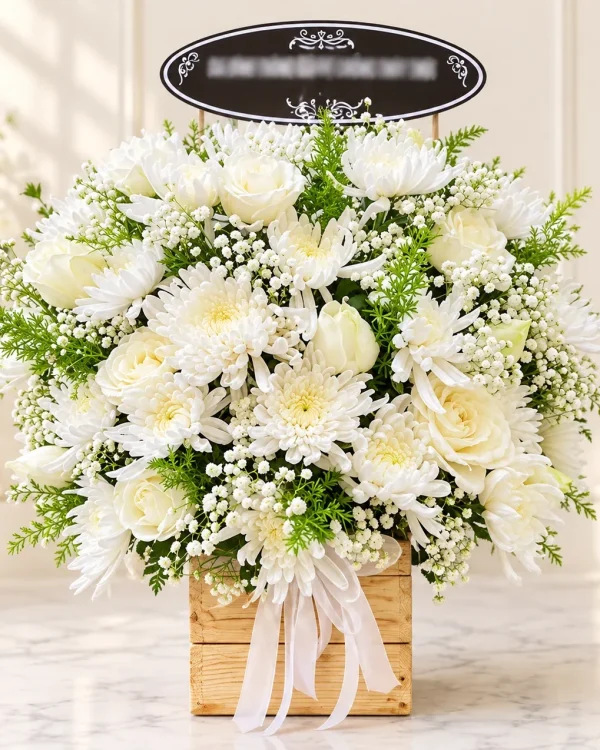
Our guide to Vietnamese funeral flowers explains which flowers to choose, what the banner says and when the flowers should arrive. Every funeral stand and wreath comes with a banner showing your name and a condolence phrase in Vietnamese. You can see the stands, wreaths and table arrangements in the sympathy flowers we deliver.
What should I write in a condolence message?
Keep it short and sincere, and sign with the name the family knows you by. A message in English is fine when the family reads English; if they do not, a relative can read it to them. For example:
- “With deepest sympathy. We are thinking of you and your family.”
- “We are so sorry for your loss. Sending love and strength to all of you.”
- “[Name] will be greatly missed. Our thoughts are with your family.”
Every order includes a free greeting card. More examples are in our guide to what to write on a flower card.
How do Buddhist and Catholic funerals differ?
In a Buddhist funeral, monks or nuns are invited to chant prayers for the person who has died, beginning at the encoffining, and the family makes offerings every day. After a cremation, many families now place some of the ashes at a pagoda.
A Catholic funeral centers on prayer: prayers during the visitation, a funeral Mass, and prayers at the grave. A white cloth is laid over the coffin, and incense is usually used at the funeral Mass. The Church allows cremation but does not encourage it, and the ashes are not scattered or kept at home. Catholics may also burn incense, bow and keep the death anniversaries, as long as superstitious practices are left out.
Funeral flowers fit both traditions. Sympathy flowers are delivered to homes, funeral homes, pagodas and churches nationwide, confirmed on WhatsApp first.
What happens 49 days after a death in Vietnam?
For Buddhist families, the 49 days after a death are a time of daily offerings of food and water for the person who died. The offerings follow a weekly rhythm of up to seven weeks, and the 49th day is marked with a ceremony. Some families also hold a rite on the 100th day, known as the end of weeping.
These dates are family occasions. If you are close to the family, a visit, a message or flowers for their home are a kind way to show that you still remember.
What is a Vietnamese death anniversary (giỗ)?
The first anniversary falls 12 months after the death, and the end of the mourning period is marked after 24 months. From then on, the family remembers the person each year on the death anniversary (giỗ), usually with a meal and offerings at the family altar, to which relatives and close friends are invited.
How can I show respect from abroad?
You can still be present when you cannot travel:
- Send a wreath or a flower stand to the funeral, with your name and a condolence phrase on the banner. Please give us a phone number for a family member or someone at the funeral. We call first to check that visiting has started, because flowers can only be brought in once the family is receiving visitors.
- Send flowers to the family’s home after the funeral, on the 49th day or on the death anniversary.
- Send a message to the family, and if you want to give condolence money, ask a relative or friend there how best to do it.
Same-day flower delivery is available, subject to location, order time, and confirmation. Ordering from abroad works the same way as for any other occasion: our full ordering guide shows every step, and nothing is charged on the website. Cam Nguyen handles every order on WhatsApp personally, so you can explain the situation in your own words.
Quick answers
How long does a Vietnamese funeral last?
Usually a few days. The coffin often stays at home for one to three days for visits before the procession, and some places, such as Hue, now ask families to keep funerals within 72 hours.
What should I wear to a Vietnamese funeral?
Dark or subdued clothes: black, white or gray. Avoid bright colors and festive patterns.
Should I bring money to a Vietnamese funeral?
Often, yes. Condolence money is given in an envelope with your name on it, and it helps the family with the cost of the funeral. Incense, fruit and flowers are also common.
Why do Vietnamese families wear white headbands at a funeral?
White is the color of mourning in Vietnam. The white headband is a traditional sign of mourning worn by the family, not by guests.
What is the 49th day after a death?
For Buddhist families, the 49 days after a death are a time of daily offerings, and the 49th day is marked with a ceremony. Some families also mark the 100th day.
Can I send funeral flowers to Vietnam from abroad?
Yes. Sympathy flowers are delivered to homes, funeral homes, pagodas and churches nationwide, confirmed on WhatsApp first.
Sources
- VietNamNet, “Some things not to do during Tet” (2 February 2014): black and white are the colors for funerals; VnExpress, “Ý nghĩa màu sắc của mâm ngũ quả ngày Tết” (27 December 2019) and Nhân Dân, “Màu của Tết” (10 February 2019): red for luck (owner answer F-5, 2026-11-14).
- VOV4, “Dân tộc Kinh” (18 March 2013): basic steps of a Kinh funeral; 49th-day and 100th-day rites; first anniversary; reburial.
- Thanh Niên (31 July 2025): after the encoffining, the coffin stays at home about one to three days for visits (Ho Chi Minh City).
- VietnamPlus (20 July 2024): memorial service, procession, burial or cremation in the order of a funeral.
- VnExpress International (14 July 2026): Hue asks for funerals within 72 hours and encourages cremation; coastal families waited for relatives overseas.
- Hà Nội Mới (23 May 2005): hospital funeral homes; relatives and friends bring a wreath or banner and incense; sons’ straw ring and long headband.
- Tuổi Trẻ (14 May 2026): Hanoi plans at least one funeral home per urban area.
- Nhân Dân (15 April 2023): Hanoi and Ho Chi Minh City have the highest cremation rates. Hà Nội Mới (9 November 2026): about 60% of families in Hanoi choose cremation.
- Thanh Niên (9 November 2023): a funeral notice printed in the newspaper.
- Tuổi Trẻ (5 April 2008): southern mourning clothes, straw hats, mourning hoods and headbands; white as the color of mourning.
- VnExpress International (25 July 2024): a white cloth band on the head as a traditional gesture of mourning.
- Thanh Niên (28 September 2016): black, white or gray clothing for guests. VietNamNet / Trí Thức Trẻ (24 June 2015): bright clothes draw attention. VTV (25 July 2024): dark suits and dark áo dài at a state funeral.
- Catholic Bishops’ Conference of Vietnam, guidance on honoring ancestors (quoting the bishops’ 1974 text; 9 October 2025) and “Các tập tục của người Công giáo về cái chết và tang lễ” (15 January 2026).
- Thanh Niên (11 March 2010): offerings of incense, fruit, cakes and money; fresh-flower wreaths.
- VnExpress, Anh Việt (20 March 2021): money in an envelope with the name written; the family’s book of names.
- Người Lao Động (19 November 2025): condolence money as the community’s share, helping with the funeral.
- VOV (4 October 2012): wreaths express the feelings of neighbors, friends and colleagues. Tuổi Trẻ / PLO (26 September 2012): organizations’ ribbons.
- Giác Ngộ (7 July 2019; 10 August 2023; 18 August 2023; 20 November 2024): Buddhist rites, the 49 days, the first anniversary and the end of mourning.
- Báo Pháp luật (11 November 2021): the 100th-day rite, “the end of weeping”.
- Thanh Niên (9 September 2020): ashes placed at pagodas after cremation.
- VnExpress, “Kỹ nghệ khâm liệm của cặp vợ chồng ở Huế” (5 June 2013): khâm liệm and nhập quan.
- Thanh Niên, “Nguyện vọng của gia đình về tang lễ Quý Bình” (6 March 2025): cáo phó, lễ viếng, lễ truy điệu and hỏa táng in a funeral notice.
- VietnamPlus, “Lễ truy điệu và Lễ an táng Tổng Bí thư Nguyễn Phú Trọng” (26 July 2024): lễ di quan, đưa tang, hạ huyệt and an táng (a state funeral, cited for the names of the rites). Thanh Niên, “Nghi lễ đám tang” (9 March 2010): di quan; phúng điếu.
- Giác Ngộ, “Không cúng chung thất liệu người chết có siêu thoát?” (10 August 2023): chung thất, the 49th day. Tuổi Trẻ (3 January 2022): lễ tốt khốc, the 100th-day rite (“thôi khóc”).
- Giác Ngộ, “Tính sai ngày giỗ, giờ phải làm sao?” (11 October 2023): giỗ đầu, tiểu tường, 12 months after death. Tuổi Trẻ (26 August 2024): đám giỗ.
Choose your flowers
More guides
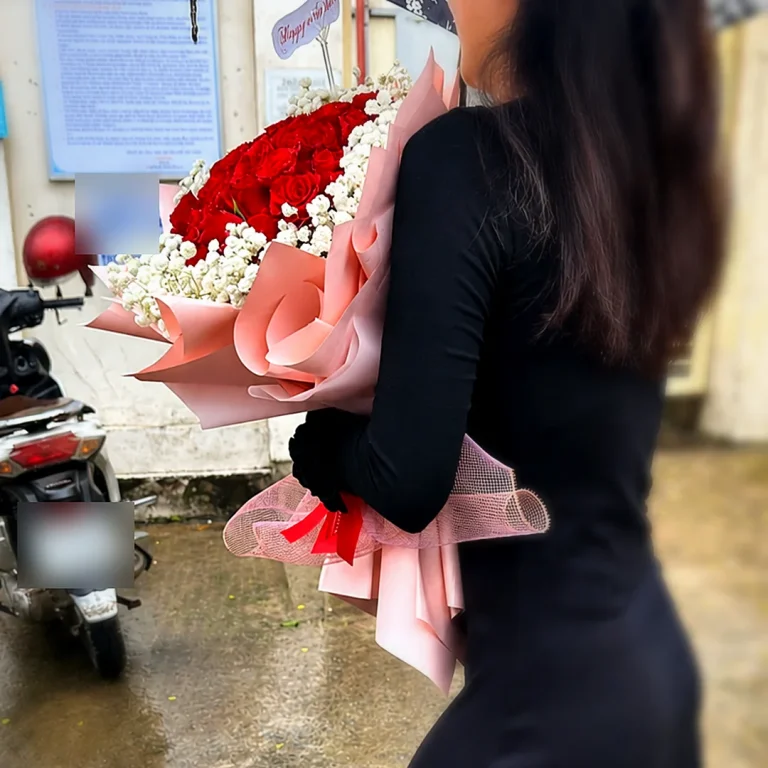 How to Send Flowers to Vietnam from Abroad
Send flowers to Vietnam from abroad: pick a design, confirm on WhatsApp, pay by card, PayPal or Wise, and see a real photo of your bouquet before dispatch.
Last verified
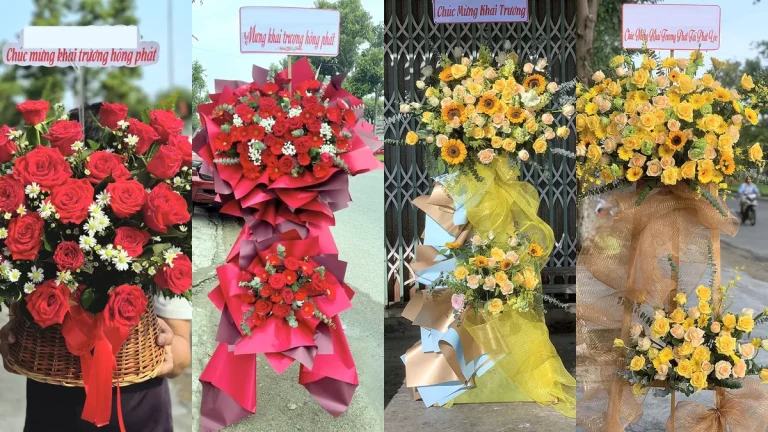 Grand Opening Flowers in Vietnam: Customs, Banners & How to Send
Send a grand opening flower stand to any business in Vietnam. Learn lucky colors, banner wording and timing, then order in English with photo proof.
Last verified
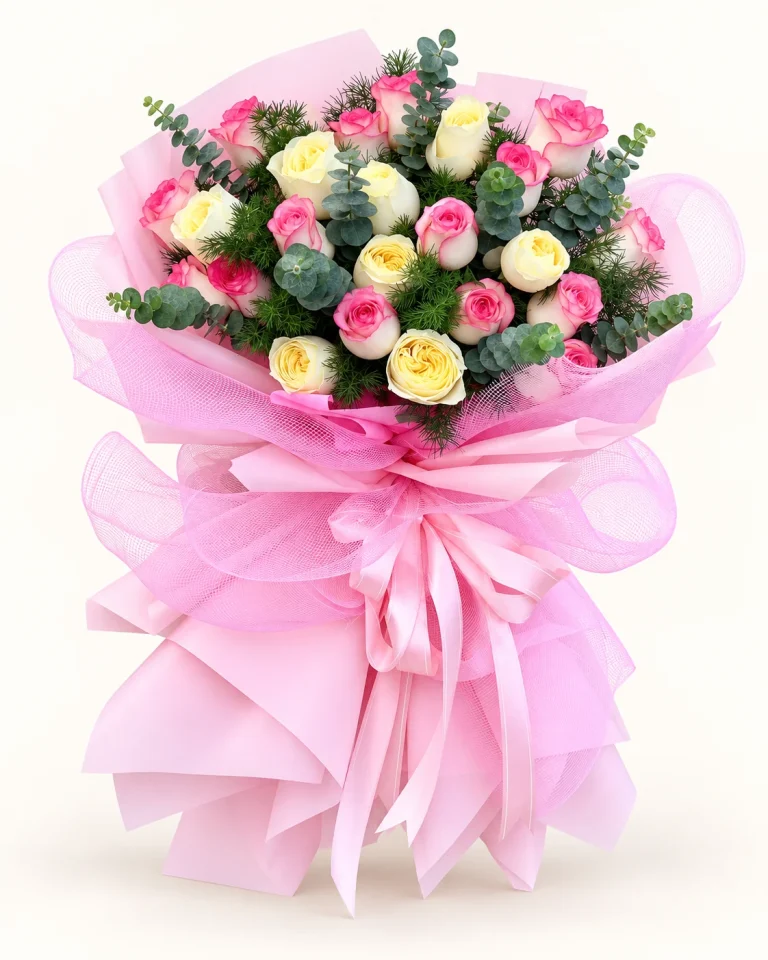 Send Flowers to Vietnam from Canada
Sending flowers from Canada to Vietnam: order on WhatsApp, pay by card, PayPal or Wise, check the time difference, and get a photo of your bouquet.
Last verified
Nothing is charged on the website. Once your order is confirmed, we send you a PayPal invoice or our bank details for a Wise transfer.
Choose flowers